END-GRAIN GUIDES
Why Japanese Knives Chip, and How to Prevent It
Why do japanese knives chip? Learn the causes and practical ways to protect a thin, hard edge.
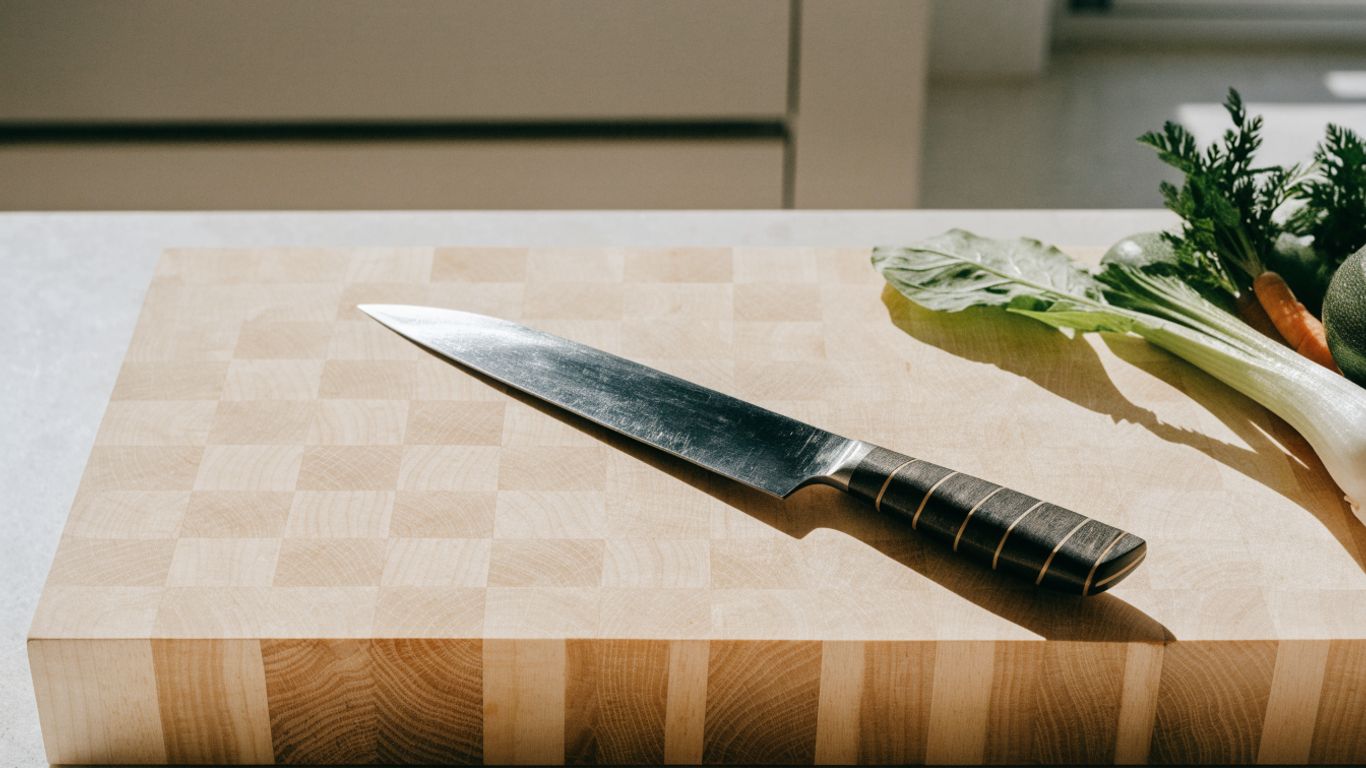
Why do Japanese knives chip more readily?
Japanese knives can chip when a hard, thin edge meets impact or sideways force. If you’re asking why do japanese knives chip, the short answer is that many are designed to cut cleanly, not to pry, twist, or strike hard materials. For home cooks moving up to a Japanese knife, knowing how the steel and edge respond helps you choose safer habits.
Hard steel resists rolling but can fracture under impact
Hard steel tends to hold its shape instead of bending easily, but hardness is not the same as toughness. When the edge takes a sharp impact, it may lose a small fragment rather than deform smoothly. That’s why a clean, controlled cut matters more than force.
Thin edge geometry improves cutting but leaves less material behind the edge
A thin edge passes through food with less resistance, but there is also less steel immediately behind the cutting edge to support it. A fine edge can handle ordinary slicing well while remaining vulnerable to a twist or collision. The useful distinction is sharpness without side stress: let the edge do the cutting, and avoid levering it through food.
Steel type and heat treatment affect toughness
Two knives can have different levels of chipping risk even when they look similar. Steel composition and heat treatment influence how an edge responds to impact, so the label “Japanese steel” alone does not tell you exactly how delicate a knife will be. Check the maker’s care guidance for your specific blade, and choose a knife that suits your ingredients and cutting habits.
A small chip is different from a rolled or dented edge
A chip is a missing notch in the edge; a roll or dent is a section that has bent out of line. Their appearance can suggest different kinds of stress, but a close look under good light is more useful than guessing from how the knife feels. This quick comparison can help you describe what you see before deciding what to do.
| Edge condition | What you may see | Common response |
|---|---|---|
| Small chip | A notch or bright gap in the edge | Careful sharpening may remove minor damage |
| Rolled edge | A section leans to one side | Assess whether the edge can be restored without removing much steel |
| Bent tip | The point is visibly out of line | Stop using the tip for the task and get experienced help if needed |
The categories are a starting point, not a diagnosis: damage can be hard to see, especially near the tip. If you’re unsure, avoid trying to bend the steel back or forcing the edge through food; a repair professional can assess more serious damage.
Cutting habits that put the edge at risk
Most everyday chips are preventable with a few changes in how you move the blade. Keep the knife’s path controlled, and use the edge for cutting rather than as a lever or scraper. Small habits matter because sideways pressure can stress a fine edge even when the ingredient itself is not especially hard.
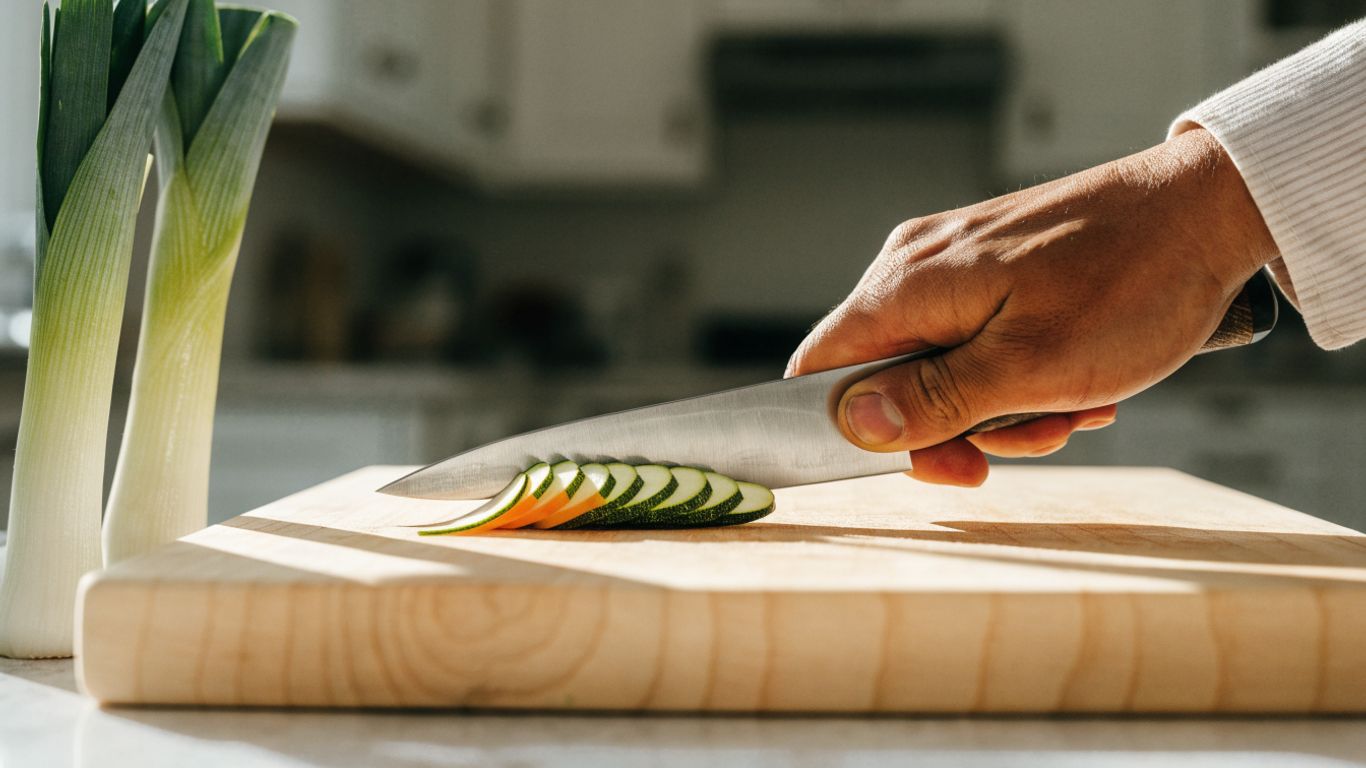
Twisting or prying while the blade is in food
If the blade sticks in a dense ingredient, resist the urge to twist the handle to free it. That turns a straight cut into sideways pressure on the thinnest part of the edge. Pull the knife back along the cut, reposition, and continue with a motion that follows the blade’s intended path.
Using a sideways motion instead of lifting the knife cleanly
A lateral scrape across the board can drag the edge against the surface. Turn the knife so its spine or flat side moves the food, or use a bench scraper when you need to gather chopped ingredients. For a more controlled vegetable cut, a stable board and a consistent grip help; the even-dice method explains a simple plank-to-stick-to-cube sequence.
Striking the board with more force than the cut requires
A firm, measured stroke is usually enough for routine slicing and chopping. If the blade is repeatedly slammed into the board, the edge experiences unnecessary impact. To keep your motion economical, focus on these habits:
- Let the knife’s weight and sharpness do the work.
- Use a steady rhythm rather than an abrupt downward blow.
- Keep the blade path vertical or slightly forward, not sideways.
- Pause and reposition when an ingredient resists the cut.
You do not need to make every cut delicate or slow; the aim is to avoid force that does not help the blade move through the food. Practicing a consistent grip and path can make ordinary prep feel more controlled.
Letting the blade contact the counter, sink, or another utensil
A knife can chip outside the cutting motion too. Setting it down where the edge hits a counter, dropping it into a sink, or knocking it against another utensil creates an impact the edge was not meant to take. Keep the blade clear of hard surfaces when you pause, and pass it handle-first if another person needs it.
Foods and tasks that can damage a Japanese knife
A Japanese kitchen knife is suited to many everyday cutting jobs, but it is not a tool for every hard object in the kitchen. Bone, frozen food, and hard shells can put far more stress on a thin edge than vegetables or boneless proteins. Before you start, consider whether the ingredient needs a different tool or a change in preparation.
Work around bones, hard shells, pits, and frozen food
Do not use a fine-edged knife to chop through bones, crack hard shells, or force a cut through frozen food. Cut around pits rather than striking them, and let frozen ingredients soften enough to cut safely with an appropriate tool. If a task requires breaking or splitting something hard, use equipment designed for that job instead of risking the knife’s edge.
Use a sturdier knife for squash, hard cheese, or other dense ingredients
Dense foods can trap a thin blade and tempt you to rock or twist it free. For hard squash, firm cheese, or similarly resistant ingredients, use a sturdier knife suited to the work, or cut the food into manageable pieces with an appropriate tool. The knife-style comparison can help you consider blade shape, cutting style, and edge durability when choosing a knife for your usual prep.
Choose the right tool for scraping food off the board
A knife edge is for cutting, not for pushing scraps sideways across the board. Use the spine of the knife or a bench scraper to gather food, keeping the sharp edge away from the board’s surface. That simple switch reduces needless contact and helps preserve the edge between sharpening sessions.
How the cutting board affects chipping
A hard or unstable board can add impact to each cut, especially when your technique already brings the edge down forcefully. Wood and suitable plastic are common choices for everyday knife work, while glass, stone, and ceramic surfaces can be unforgiving to a fine edge. Board construction also changes how a cut feels, so it is worth paying attention to the surface as well as the knife.
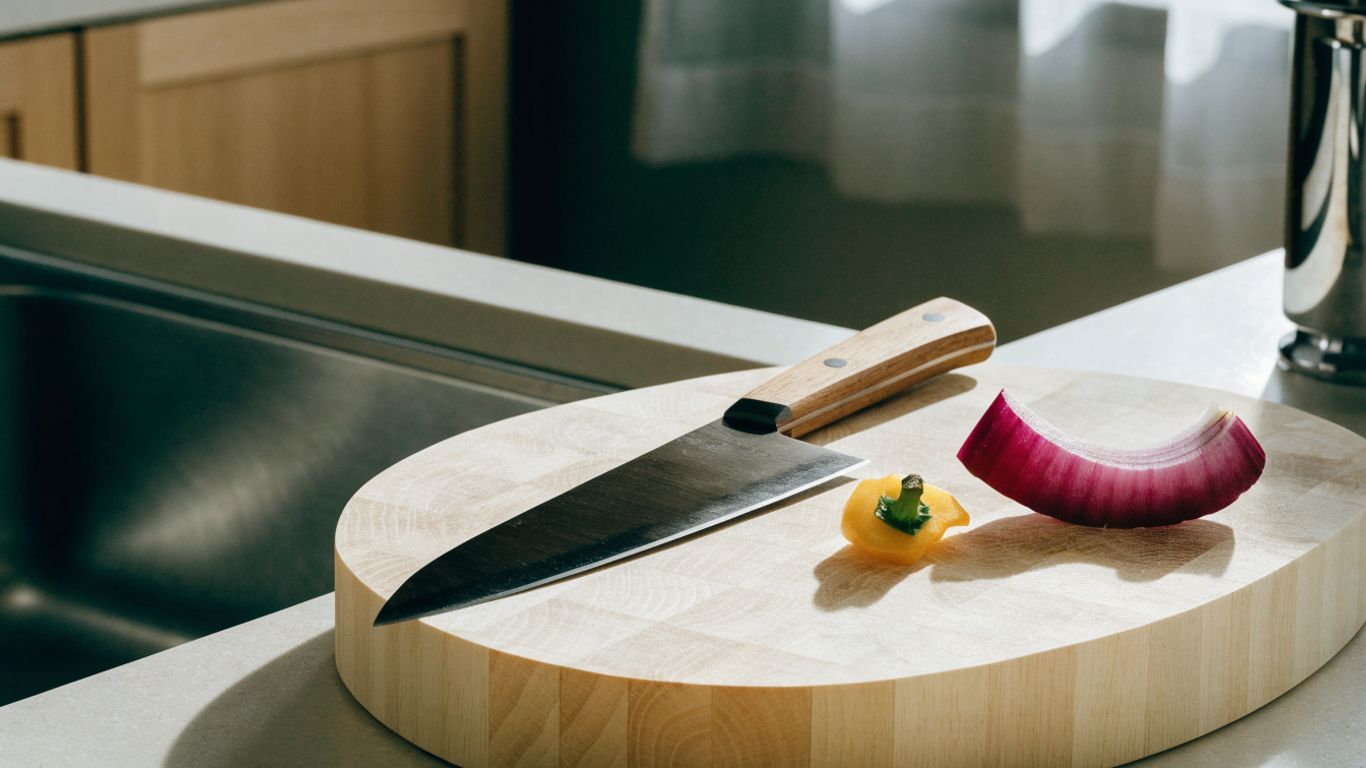
Use a stable wood or plastic board instead of glass, stone, or ceramic
Choose a board that stays put while you cut and offers a forgiving surface under the edge. A damp towel under a lightweight board can help keep it from sliding. For a broader look at board styles and their interaction with knives, see this guide to end-grain boards and knife use.
Consider how board construction changes the feel of each cut
The way a board is built can change its sound and feel under the knife, though no construction makes careless technique harmless. A board should be stable, flat, and comfortable for the work you do. Judge it alongside your cutting motion rather than assuming that one surface will suit every cook or knife.
Replace or avoid boards with hard seams, embedded debris, or damaged surfaces
A deep split, rough raised seam, or trapped hard debris can create an unexpected contact point for the edge. Check the surface now and then, and stop cutting on a damaged area until it is repaired or replaced. Keeping the board clear and steady makes it easier to maintain a predictable cutting path.
Sharpening and storage practices that protect the edge
A well-maintained edge cuts with less effort, while careless sharpening or rough storage can introduce damage of its own. The right approach depends on the knife’s design, steel, and the maker’s recommendations. If you are new to Japanese knives, get familiar with those instructions before experimenting with tools or angles.
Keep the edge sharp so it cuts without excess force
A dull knife may encourage you to press harder or saw repeatedly, increasing the chance of slipping or applying uneven pressure. Sharpen when the knife no longer cuts cleanly, and use a method suited to its steel and edge. Avoid treating a honing rod as a universal fix; some tools and techniques may not suit a particular blade.
Use a sharpening angle suited to the knife’s design
There is no single angle that suits every Japanese knife. Edge geometry, bevel design, and the maker’s specifications all matter, so use the guidance provided for your model rather than copying a number from another knife. If you are unsure, a skilled sharpener can help preserve the intended geometry.
Avoid rough honing tools and careless sharpening pressure
Heavy pressure can remove more steel than needed or leave an uneven edge. Work patiently with a suitable sharpening surface, and avoid aggressive tools if you do not know how they interact with the blade. A steady, informed approach is safer than trying to fix a small issue with force.
Store the blade where it cannot strike other knives or hard surfaces
Keep the edge from knocking against utensils, drawers, or other blades when the knife is not in use. A blade guard, a suitable knife block, or a secure magnetic strip can help, provided the knife is placed and removed without scraping its edge. Dry the blade and follow the maker’s care instructions, especially for carbon steel; this carbon-steel care guide covers cleaning, drying, and safe storage.
What to do if a Japanese knife develops a chip
Stop using the knife for the task that caused the damage and inspect the edge in good light. A small chip may be repairable with careful sharpening, but larger damage can require more extensive work. The goal is to restore a safe, even edge without removing more steel than necessary.
Check whether the damage is a chip, roll, or bent tip
Look for a missing notch, a section of edge that leans to one side, or a point that no longer lines up. Clean and dry the blade first, then inspect both sides without running a finger along the edge. If the damage is hard to identify, treat it cautiously rather than assuming it is only a minor nick.
Use careful sharpening for minor damage and seek help for larger chips
Very small chips may be removed by sharpening, but repairing them takes time and can change the edge profile. A large chip, multiple chips, or a damaged tip is a good reason to consult an experienced sharpener. Avoid bending the blade or grinding aggressively at home unless you know how to restore its geometry.
Adjust the cutting task or technique that caused the damage to prevent a repeat
Once the edge is repaired, think back to the moment it was damaged. Was the food unusually hard, did the knife twist, or did the edge hit a hard surface? Change that part of the process, and choose a more suitable tool when the task calls for force rather than precise cutting.
Frequently Asked Questions
Are Japanese knives more likely to chip than other kitchen knives?
Some Japanese knives have hard steel and thin edges that can chip under impact or sideways force. The degree of risk varies by steel, heat treatment, edge geometry, and how you use the knife.
Can a Japanese knife chip during normal cooking?
It can, particularly if the edge strikes a hard surface or gets twisted in dense food. Controlled cuts on a stable board reduce avoidable stress.
Is a small chip dangerous?
A chip can make cutting less predictable and may worsen if you keep using the damaged area. Inspect it and repair minor damage carefully, or ask a professional if you are unsure.
Can you cut bones with a Japanese chef’s knife?
Do not chop through bones with a fine-edged Japanese kitchen knife. Cut around bones or use a tool designed for that task.
Are glass cutting boards safe for Japanese knives?
Glass is a hard surface that can be harsh on a fine edge. A stable wood or suitable plastic board is generally a more forgiving choice for routine knife work.
Does a sharper knife chip less easily?
A sharp knife usually needs less pressure to cut, which can help you avoid forceful strokes. Sharpness does not protect an edge from impact, twisting, or unsuitable tasks.
Can you fix a chipped Japanese knife at home?
A very small chip may be repairable with careful sharpening if you have the right tools and experience. For larger chips or a bent tip, seek help from an experienced sharpener.
How this guide was put together
The End Grain Cutting Board Guide team writes and fact-checks every guide on End Grain Cutting Board Guide. Comparisons are based on maker specifications, published standards and food-safety guidance from sources such as the USDA, and each guide is reviewed and updated when specs or prices change. More about us.